(2018·江苏高考改编)Around 13,500 new jobs were created during the period, (exceed) the expected number of 12,000 held by market analysts.快捷解题技法1.非谓语动词填空的两个原则(1)主被动原则逻辑主语与非谓语动词是主谓关系时,用现在分词ing形式;是动宾关系时用过去分词ed形式。Tsinghua University, founded in 1911, is home to a great number of outstanding figures.清华大学建立于1911年,是许多杰出人物的摇篮。The lecture, starting (which started) at 7:00 p.m. last night, was followed by an observation of the moon with telescopes.讲座于昨晚七点开始,随后是用望远镜观察月球。(2)时间先后原则非谓语动词表示正在进行,用现在分词ing形式;表示已经完成,用过去分词ed形式;表示将来发生的动作,用不定式to do形式。It’s a pity that he won’t be able to attend the party to be held tomorrow at the art center.很遗憾他将不能参加明天在艺术中心举办的宴会。It’s a pity that he is unable to attend the party being held now at the art center.很遗憾他不能参加正在艺术中心举办的宴会。It was a pity that he was unable to attend the party held yesterday at the art center.很遗憾他没能参加昨天在艺术中心举办的宴会。2.牢记用动词ing/to do 形式作宾语的动词(短语)(1)接动词ing形式作宾语的常用动词(短语)有:喜欢考虑不可免(enjoy, consider, avoid)不禁放弃太冒险(cannot help, give up, risk)欣赏承认很值得(appreciate, admit, be worth)介意想象莫拖延(mind, imagine, delay, put off)允许完成是期待(allow, finish, look forward to)建议保持勤操练(suggest, keep, practice)致力原谅要坚持(be devoted to, excuse, insist on)继续成功不错过(keep on, succeed in, miss)(2)接不定式作宾语的常用动词(短语)有:一准备(prepare)、二决定(decide, determine)、三要求(ask, demand, request)、四希望(desire, expect, hope, wish);提供计划(offer, plan, intend);设法学会(manage, learn);未能选择(fail, choose);只好乞求(beg);拒绝答应(refuse, promise);假装同意(pretend, agree)。(3)有些动词或动词短语既可接不定式作宾语,也可接动名词作宾语,但表示的含义不同。mean快捷解题技法forget快捷解题技法regret快捷解题技法try快捷解题技法go on快捷解题技法remember快捷解题技法can’t help快捷解题技法I regret to tell you that he didn’t take your application into consideration.我很遗憾地告诉你他没有考虑你的申请。I regret making rude comments on your appearance.我非常遗憾对你的外表做了无礼的评论。3.掌握非谓语动词的几种句型公式(1)不定式作宾语补足语tell/order/persuade/force/warn/encourage/ask/invite+sb.to do sth.。I’d like to invite you to take part in the activity.我想邀请你参加这项活动。(2)后用省略“to”的不定式作宾语补足语的动词(短语):“五看;三使;二听;一感觉”。五看:look at/watch/notice/see/observe sb.do sth.三使:make/have/let sb.do sth.;二听:listen to/hear sb. do sth.;一感觉:feel sb.do。I like the film because it can make me laugh.我喜欢这部电影,因为它能让我发笑。(3)用于it作形式主语结构中:It+be+名词或形容词(no good, no use, a pleasure, worthwhile, useless)+动词ing;It+be+形容词(difficult/kind/clever等)+for/of sb.to do sth.;It+takes+sb.+some time+to do sth.As is known to us, it’s no use complaining without taking action.众所周知,只抱怨不采取行动是没用的。(4)only to do结构表示出乎意料的结果。He hurried to the station, only to find the train had left.他匆忙赶到车站,结果却发现火车已经开走了。快捷解题技法1.现在分词和过去分词作状语现在分词作状语表示的动作与句子主语之间为逻辑上的主谓关系;过去分词作状语表示的动作与句子主语之间为逻辑上的动宾关系。①(2019·福州八中质检) (realize) it was our last high school sports meeting, we decided to make it an unforgettable experience for all of us.分析:分析句子结构可知,空格所在的部分为非谓语动词作状语,realize与主语we之间为逻辑上的主谓关系,故填Realizing。②(2018·蚌埠二中模拟)Greatly (encourage), the team conducted another experiment, this time with water that contained bacteria.分析:分析句子结构可知,空格所在的部分为非谓语动词作状语,encourage与主语the team之间为逻辑上的动宾关系,故填encouraged。2.现在分词和过去分词作前置定语和表语此时现在分词和过去分词都相当于形容词,现在分词意为“令人感到……的”,过去分词意为“(人)感到……的”。③There were many people waiting at the bus stop, and some of them looked very anxious and (disappoint).分析:此处looked后面为表语部分,此处指一些人看起来很焦急、很失望。故填disappointed。④(2018·山西省实验中学质检)Dennis Williams, the new owner of the phone number, responded to the (excite) baby news.分析:此处为非谓语动词作前置定语,表示“令人兴奋的有关孩子的消息”。故填exciting。⑤With a (puzzle)look on my face, I pointed to myself and said,“Me?”分析:句意:脸上带着疑惑的表情,我指着自己说:“我吗?”a puzzled look“疑惑的表情”;a puzzling look“令人疑惑的表情”。故填puzzled。3.不定式、现在分词和过去分词作后置定语不定式作后置定语表示动作尚未进行;现在分词作后置定语表示主动、进行;过去分词作后置定语表示被动、完成。⑥(2016·四川高考)For 25 days, she never left her baby, not even to find something (eat)!分析:句意:25天中,她寸步不离她的孩子,甚至不去找东西吃!动词不定式to eat作后置定语,修饰前面的不定代词something。故填to eat。⑦(2015·全国卷Ⅰ)Abercrombie & Kent, a travel company in Hong Kong, says it regularly arranges quick getaways here for people (live) in Shanghai and Hong Kong.分析:此处表示“居住”在上海和香港的人们,应用非谓语动词作后置定语,people与live之间为主谓关系,故填living。⑧(2015·全国卷Ⅱ)The adobe dwellings (土坯房) (build) by the Pueblo Indians of the American Southwest are admired by even the most modern of architects and engineers.分析:由谓语动词are admired可知空格处填非谓语动词,adobe dwellings与build之间是被动关系,应用过去分词短语作后置定语。故填built。4.不定式与动名词作宾语有些动词后只跟不定式作宾语,例如agree, decide, refuse, manage等;而有些动词只跟动名词作宾语,例如avoid, finish, mind, practise等。还有些动词既可以跟动名词作宾语,也可以跟不定式作宾语,但意义上有区别,这些都要特别注意。⑨(2018·浙江高考)I still remember (visit) a friend who’d lived here for five years and I was shocked when I learnt she hadn’t cooked once in all that time.分析:句意:我记得曾经拜访过一位在这里生活5年的朋友,我得知那时他没做过饭时我很震惊。remember doing sth.意为“记得做过某事”,故填visiting。快捷解题技法(2018·菏泽模拟)Next keep in mind that forgiveness does not necessarily mean (accept) the action of the person who upsets you.分析:mean to do sth.意为“打算做某事”,mean doing sth.意为“意味着做某事”,故填accepting。快捷解题技法一、 单句对点练——练明考点1.(2018·全国卷Ⅱ改编)I saw there were two instructors on board and a man (lie) across the middle.
(2018·江苏高考改编)Around 13,500 new jobs were created during the period, (exceed) the expected number of 12,000 held by market analysts.

1.非谓语动词填空的两个原则
(1)主被动原则
逻辑主语与非谓语动词是主谓关系时,用现在分词ing形式;是动宾关系时用过去分词ed形式。
Tsinghua University, founded in 1911, is home to a great number of outstanding figures.
清华大学建立于1911年,是许多杰出人物的摇篮。
The lecture, starting (which started) at 7:00 p.m. last night, was followed by an observation of the moon with telescopes.
讲座于昨晚七点开始,随后是用望远镜观察月球。
(2)时间先后原则
非谓语动词表示正在进行,用现在分词ing形式;表示已经完成,用过去分词ed形式;表示将来发生的动作,用不定式to do形式。
It’s a pity that he won’t be able to attend the party to be held tomorrow at the art center.
很遗憾他将不能参加明天在艺术中心举办的宴会。
It’s a pity that he is unable to attend the party being held now at the art center.
很遗憾他不能参加正在艺术中心举办的宴会。
It was a pity that he was unable to attend the party held yesterday at the art center.
很遗憾他没能参加昨天在艺术中心举办的宴会。
2.牢记用动词ing/to do 形式作宾语的动词(短语)
(1)接动词ing形式作宾语的常用动词(短语)有:
喜欢考虑不可免(enjoy, consider, avoid)
不禁放弃太冒险(cannot help, give up, risk)
欣赏承认很值得(appreciate, admit, be worth)
介意想象莫拖延(mind, imagine, delay, put off)
允许完成是期待(allow, finish, look forward to)
建议保持勤操练(suggest, keep, practice)
致力原谅要坚持(be devoted to, excuse, insist on)
继续成功不错过(keep on, succeed in, miss)
(2)接不定式作宾语的常用动词(短语)有:
一准备(prepare)、二决定(decide, determine)、三要求(ask, demand, request)、四希望(desire, expect, hope, wish);提供计划(offer, plan, intend);设法学会(manage, learn);未能选择(fail, choose);只好乞求(beg);拒绝答应(refuse, promise);假装同意(pretend, agree)。
(3)有些动词或动词短语既可接不定式作宾语,也可接动名词作宾语,但表示的含义不同。
mean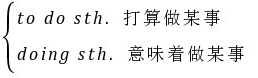
forget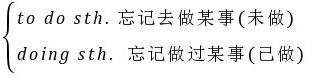
regret
try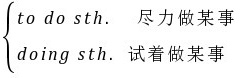
go on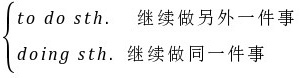
remember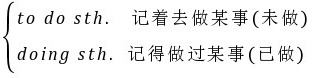
can’t help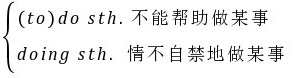
I regret to tell you that he didn’t take your application into consideration.
我很遗憾地告诉你他没有考虑你的申请。
I regret making rude comments on your appearance.
我非常遗憾对你的外表做了无礼的评论。
3.掌握非谓语动词的几种句型公式
(1)不定式作宾语补足语
tell/order/persuade/force/warn/encourage/ask/invite+sb.to do sth.。
I’d like to invite you to take part in the activity.
我想邀请你参加这项活动。
(2)后用省略“to”的不定式作宾语补足语的动词(短语):
“五看;三使;二听;一感觉”。
五看:look at/watch/notice/see/observe sb.do sth.
三使:make/have/let sb.do sth.;
二听:listen to/hear sb. do sth.;
一感觉:feel sb.do。
I like the film because it can make me laugh.
我喜欢这部电影,因为它能让我发笑。
(3)用于it作形式主语结构中:
It+be+名词或形容词(no good, no use, a pleasure, worthwhile, useless)+动词ing;
It+be+形容词(difficult/kind/clever等)+for/of sb.to do sth.;
It+takes+sb.+some time+to do sth.
As is known to us, it’s no use complaining without taking action.
众所周知,只抱怨不采取行动是没用的。
(4)only to do结构表示出乎意料的结果。
He hurried to the station, only to find the train had left.
他匆忙赶到车站,结果却发现火车已经开走了。

1.现在分词和过去分词作状语
现在分词作状语表示的动作与句子主语之间为逻辑上的主谓关系;过去分词作状语表示的动作与句子主语之间为逻辑上的动宾关系。
①(2019·福州八中质检) (realize) it was our last high school sports meeting, we decided to make it an unforgettable experience for all of us.
分析:分析句子结构可知,空格所在的部分为非谓语动词作状语,realize与主语we之间为逻辑上的主谓关系,故填Realizing。
②(2018·蚌埠二中模拟)Greatly (encourage), the team conducted another experiment, this time with water that contained bacteria.
分析:分析句子结构可知,空格所在的部分为非谓语动词作状语,encourage与主语the team之间为逻辑上的动宾关系,故填encouraged。
2.现在分词和过去分词作前置定语和表语
此时现在分词和过去分词都相当于形容词,现在分词意为“令人感到……的”,过去分词意为“(人)感到……的”。
③There were many people waiting at the bus stop, and some of them looked very anxious and (disappoint).
分析:此处looked后面为表语部分,此处指一些人看起来很焦急、很失望。故填disappointed。
④(2018·山西省实验中学质检)Dennis Williams, the new owner of the phone number, responded to the (excite) baby news.
分析:此处为非谓语动词作前置定语,表示“令人兴奋的有关孩子的消息”。故填exciting。
⑤With a (puzzle)look on my face, I pointed to myself and said,“Me?”
分析:句意:脸上带着疑惑的表情,我指着自己说:“我吗?”a puzzled look“疑惑的表情”;a puzzling look“令人疑惑的表情”。故填puzzled。
3.不定式、现在分词和过去分词作后置定语
不定式作后置定语表示动作尚未进行;现在分词作后置定语表示主动、进行;过去分词作后置定语表示被动、完成。
⑥(2016·四川高考)For 25 days, she never left her baby, not even to find something (eat)!
分析:句意:25天中,她寸步不离她的孩子,甚至不去找东西吃!动词不定式to eat作后置定语,修饰前面的不定代词something。故填to eat。
⑦(2015·全国卷Ⅰ)Abercrombie & Kent, a travel company in Hong Kong, says it regularly arranges quick getaways here for people (live) in Shanghai and Hong Kong.
分析:此处表示“居住”在上海和香港的人们,应用非谓语动词作后置定语,people与live之间为主谓关系,故填living。
⑧(2015·全国卷Ⅱ)The adobe dwellings (土坯房) (build) by the Pueblo Indians of the American Southwest are admired by even the most modern of architects and engineers.
分析:由谓语动词are admired可知空格处填非谓语动词,adobe dwellings与build之间是被动关系,应用过去分词短语作后置定语。故填built。
4.不定式与动名词作宾语
有些动词后只跟不定式作宾语,例如agree, decide, refuse, manage等;而有些动词只跟动名词作宾语,例如avoid, finish, mind, practise等。还有些动词既可以跟动名词作宾语,也可以跟不定式作宾语,但意义上有区别,这些都要特别注意。
⑨(2018·浙江高考)I still remember (visit) a friend who’d lived here for five years and I was shocked when I learnt she hadn’t cooked once in all that time.
分析:句意:我记得曾经拜访过一位在这里生活5年的朋友,我得知那时他没做过饭时我很震惊。remember doing sth.意为“记得做过某事”,故填visiting。
 (2018·菏泽模拟)Next keep in mind that forgiveness does not necessarily mean (accept) the action of the person who upsets you.
分析:mean to do sth.意为“打算做某事”,mean doing sth.意为“意味着做某事”,故填accepting。

一、
单句对点练——练明考点
1.(2018·全国卷Ⅱ改编)I saw there were two instructors on board and a man (lie) across the middle.
题目解答
答案
解析:lying 此句考查see sb. doing sth.句型,“看到某人在做某事”。“lying across the middle”作宾语a man的补足语。
2.(2018·天津高考改编)That summer, when the other teams enjoyed their vacations, we met every day and practiced (pass) and kicking the football.
解析:passing practice后跟动词ing形式作宾语,故填passing。
3.(2019·安徽名校模拟)These best cookers in the world would pick McDonald’s or KFC if they had the choice of what (eat).
解析:to eat 分析句子结构可知,此处应用“疑问代词what+to do”作介词of的宾语。
4.(2018·日照联考)Last year, a documentary (纪录片) (title) Masters in Forbidden City became popular online.
解析:titled 此处用动词的过去分词形式作名词的后置定语,意为“名为……的”。