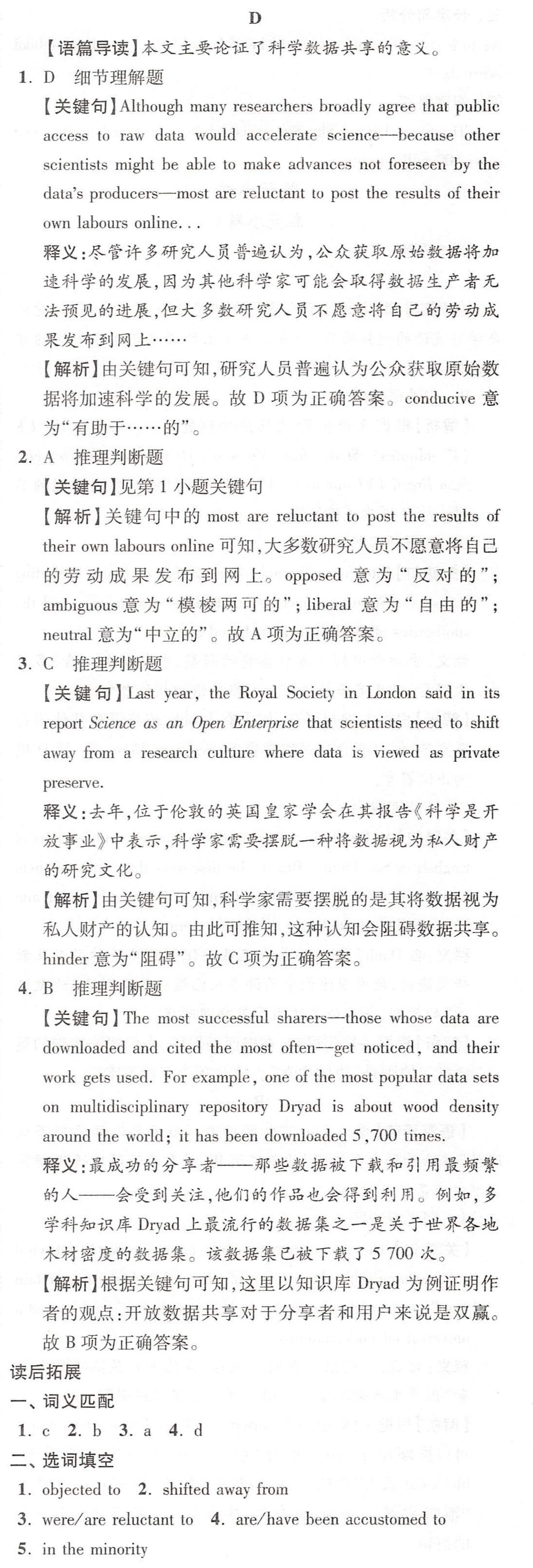
题目
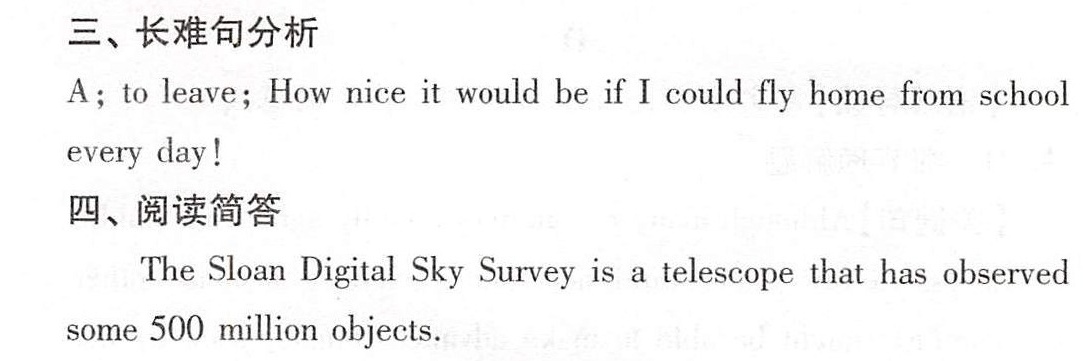
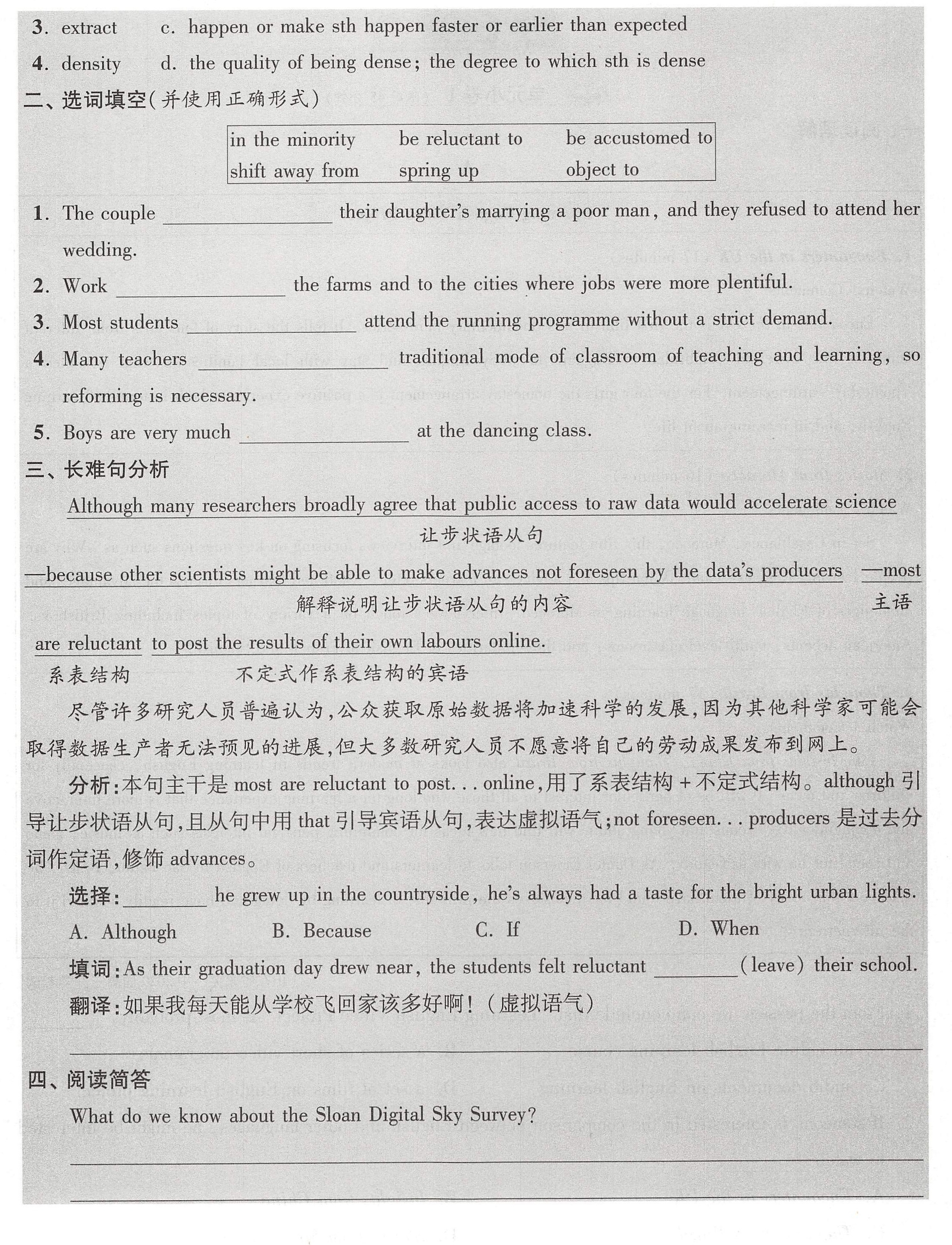
D-|||-Open data-sharers are still in the minority in many fields. Although many researchers broadly agree-|||-that public access to raw data would accelerate science-because other scientists might be able to make-|||-advances not foreseen by the data's producers-most are reluctant to post the results of their own labours-|||-online(see Nature 461, 160-163;2009) .When Wolkovich,for instance,went hunting for the data-|||-from the 50 studies in her meta-analysis, only 8 data sets were available online,and many of the-|||-researchers whom she e-mailed refused to share their work.Forced to extract data from tables or figures in-|||-publications,W Volkovich's team could conduct only limited analyses.-|||-Some communities have agreed to share online-geneticists,for example,post DNA sequences at the-|||-GenBank repository,and astronomers are accustomed to accessing images of galaxies and stars from,say,-|||-the Sloan Digital Sky Survey,a telescope that has observed some 500 million objects-but these remain-|||-the exception,not the rule.Historically,scientists have objected to sharing for many reasons:it is a lot of-|||-work;until recently,good databases did not exist;grant funders were not pushing for sharing;it has been-|||-difficult to agree on standards for formatting data and the contextual information called metadata;and there-|||-is no agreed way to assign credit for data.-|||-But the barriers are disappearing in part because journals and funding agencies worldwide areD-|||-Open data-sharers are still in the minority in many fields. Although many researchers broadly agree-|||-that public access to raw data would accelerate science-because other scientists might be able to make-|||-advances not foreseen by the data's producers-most are reluctant to post the results of their own labours-|||-online(see Nature 461, 160-163;2009) .When Wolkovich,for instance,went hunting for the data-|||-from the 50 studies in her meta-analysis, only 8 data sets were available online,and many of the-|||-researchers whom she e-mailed refused to share their work.Forced to extract data from tables or figures in-|||-publications,W Volkovich's team could conduct only limited analyses.-|||-Some communities have agreed to share online-geneticists,for example,post DNA sequences at the-|||-GenBank repository,and astronomers are accustomed to accessing images of galaxies and stars from,say,-|||-the Sloan Digital Sky Survey,a telescope that has observed some 500 million objects-but these remain-|||-the exception,not the rule.Historically,scientists have objected to sharing for many reasons:it is a lot of-|||-work;until recently,good databases did not exist;grant funders were not pushing for sharing;it has been-|||-difficult to agree on standards for formatting data and the contextual information called metadata;and there-|||-is no agreed way to assign credit for data.-|||-But the barriers are disappearing in part because journals and funding agencies worldwide areD-|||-Open data-sharers are still in the minority in many fields. Although many researchers broadly agree-|||-that public access to raw data would accelerate science-because other scientists might be able to make-|||-advances not foreseen by the data's producers-most are reluctant to post the results of their own labours-|||-online(see Nature 461, 160-163;2009) .When Wolkovich,for instance,went hunting for the data-|||-from the 50 studies in her meta-analysis, only 8 data sets were available online,and many of the-|||-researchers whom she e-mailed refused to share their work.Forced to extract data from tables or figures in-|||-publications,W Volkovich's team could conduct only limited analyses.-|||-Some communities have agreed to share online-geneticists,for example,post DNA sequences at the-|||-GenBank repository,and astronomers are accustomed to accessing images of galaxies and stars from,say,-|||-the Sloan Digital Sky Survey,a telescope that has observed some 500 million objects-but these remain-|||-the exception,not the rule.Historically,scientists have objected to sharing for many reasons:it is a lot of-|||-work;until recently,good databases did not exist;grant funders were not pushing for sharing;it has been-|||-difficult to agree on standards for formatting data and the contextual information called metadata;and there-|||-is no agreed way to assign credit for data.-|||-But the barriers are disappearing in part because journals and funding agencies worldwide are
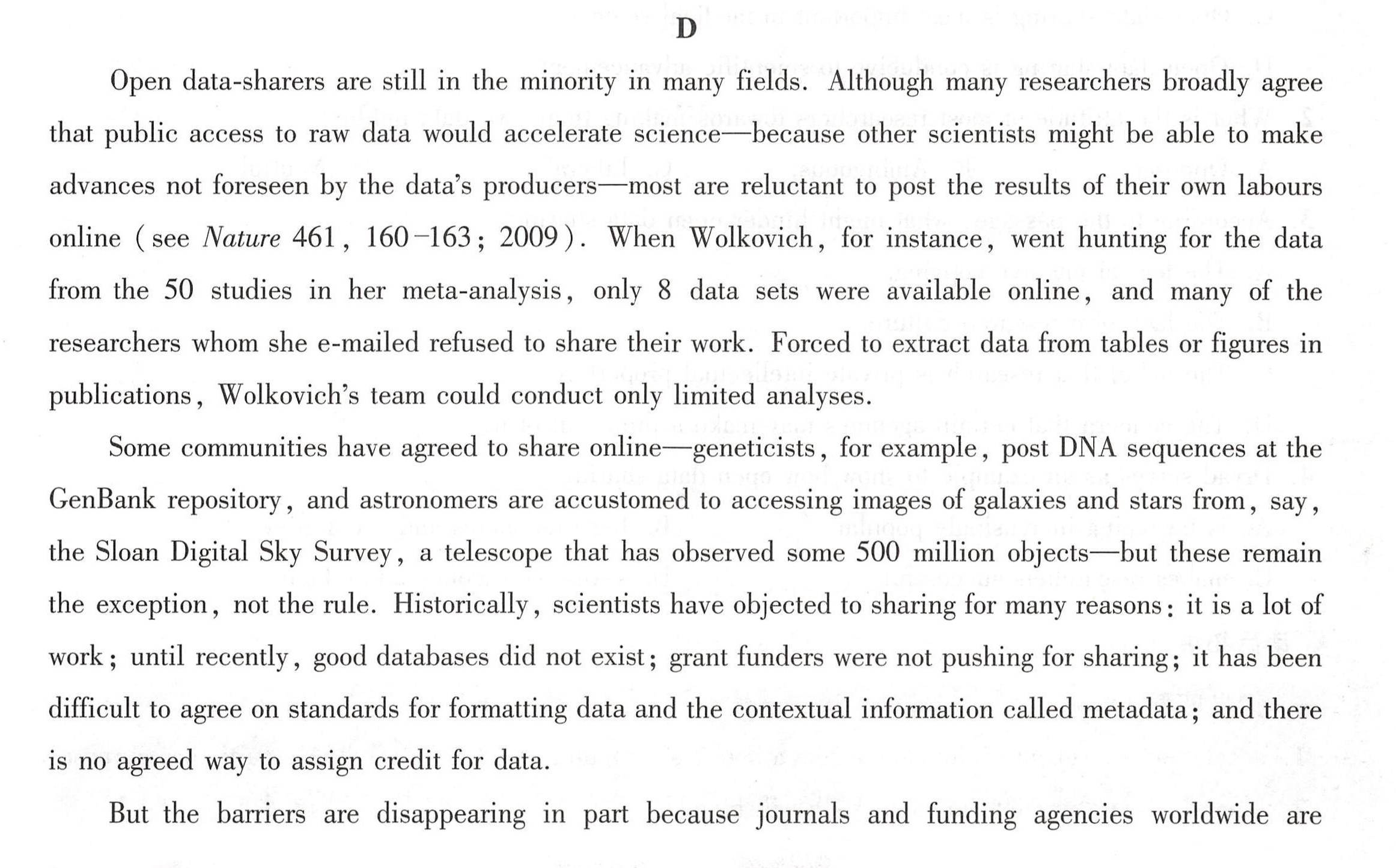
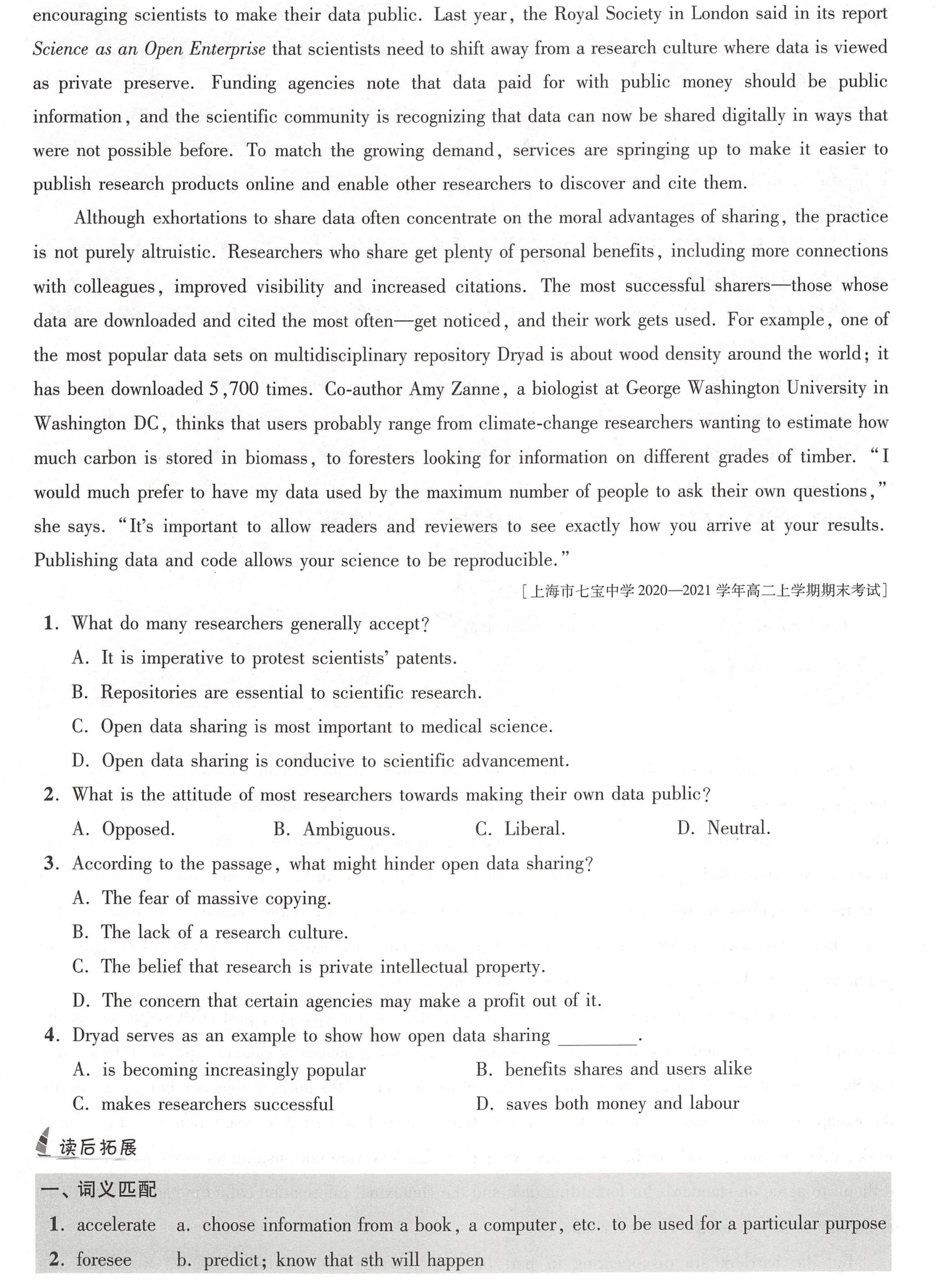
题目解答
答案