题目
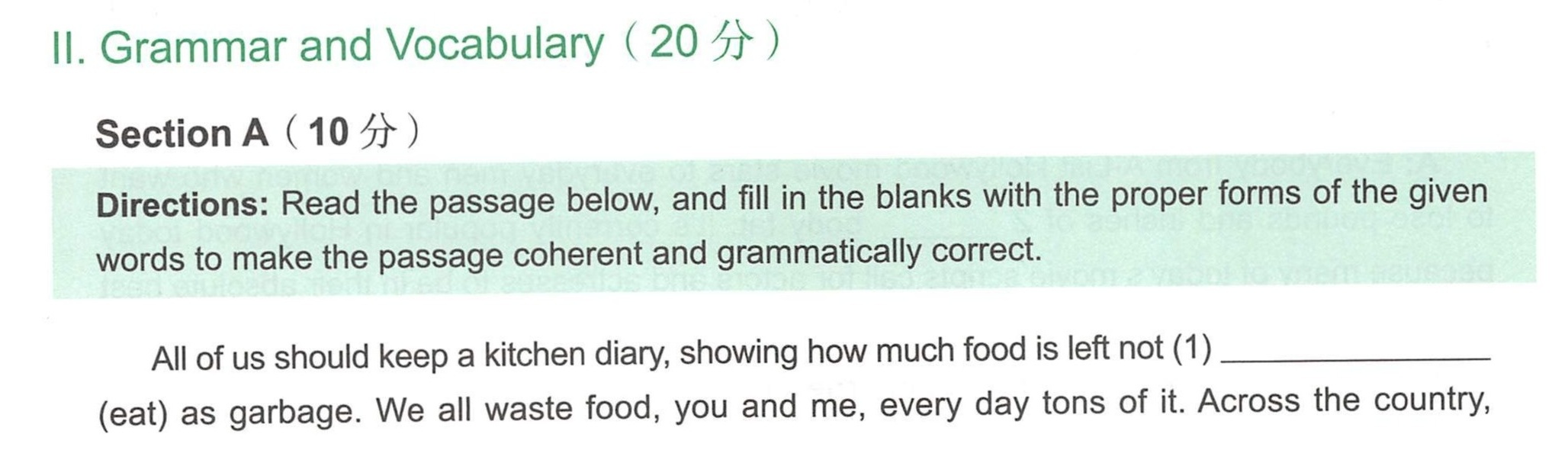
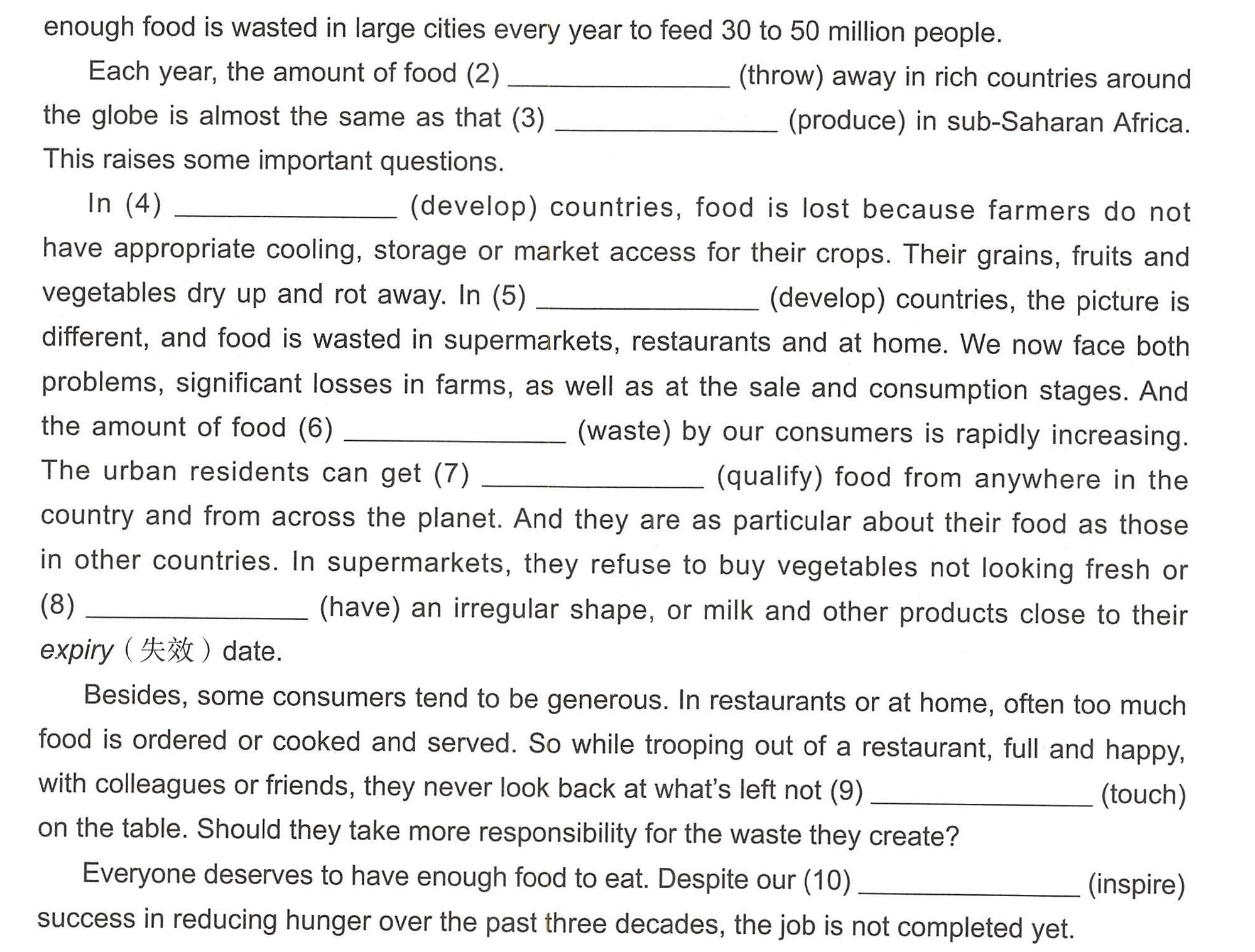
ll.Grammar and vocabulary (20分)-|||-Section A(10分)-|||-Directions:Read the passage below, and fill in the blanks with the proper forms of the given-|||-words to make the passage coherent and grammatically correct-|||-All of us should keep a kitchen diary, showing how much food is left not (1) __-|||-(eat) as garbage.We all waste food,you and me, tan xof it.Across the country,ll.Grammar and vocabulary (20分)-|||-Section A(10分)-|||-Directions:Read the passage below, and fill in the blanks with the proper forms of the given-|||-words to make the passage coherent and grammatically correct-|||-All of us should keep a kitchen diary, showing how much food is left not (1) __-|||-(eat) as garbage.We all waste food,you and me, tan xof it.Across the country,
题目解答
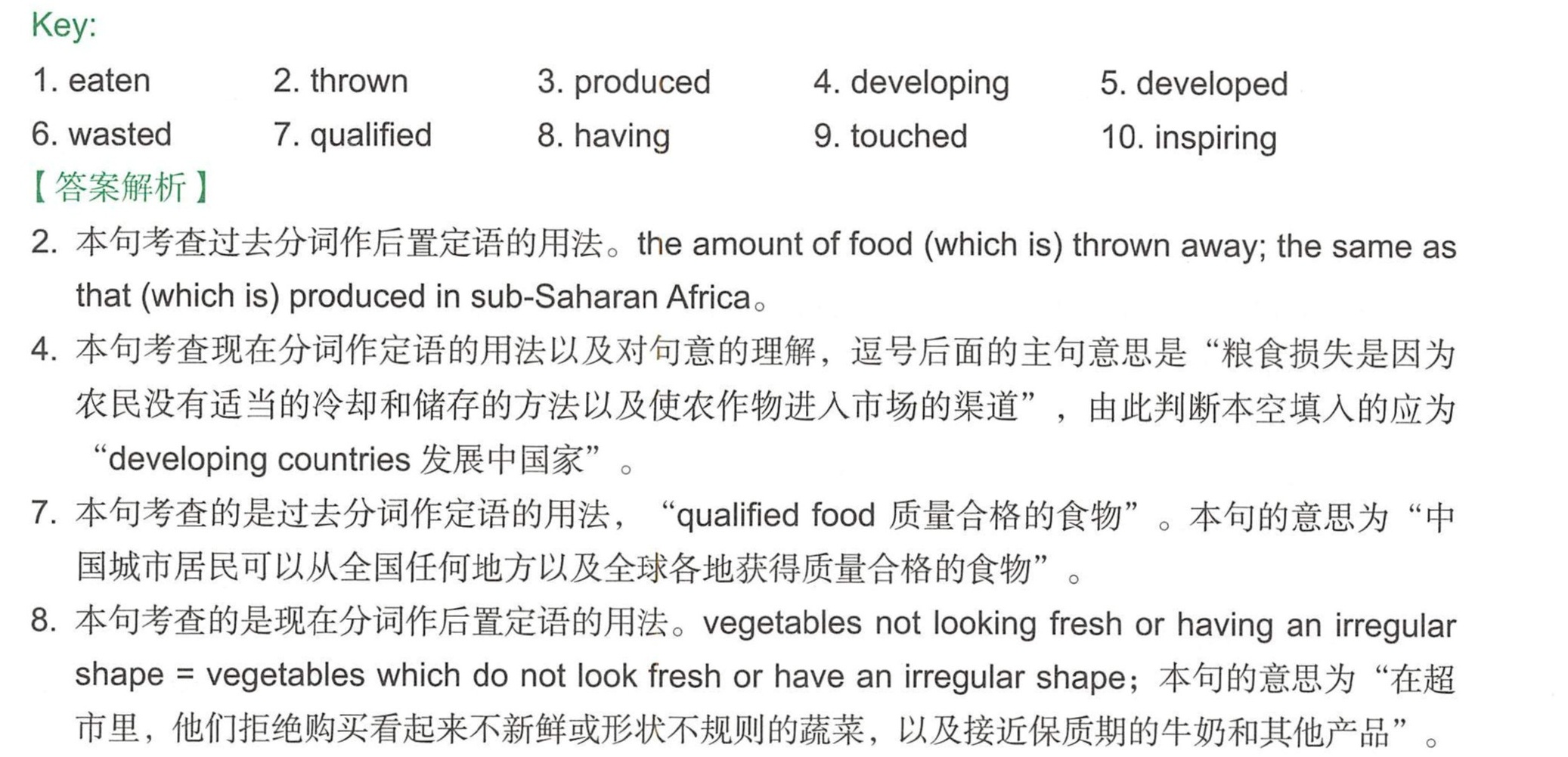
答案
解析
本题主要考查动词的正确形式在语境中的运用,涉及过去分词、现在分词、形容词形式等语法点。解题核心在于:
- 判断句子逻辑关系:明确主被动关系、修饰关系;
- 识别固定搭配:如"the amount of food (被)浪费"需用过去分词;
- 理解上下文语境:如"发展中国家"与"发达国家"的对比需用现在分词作定语。
第(1)题
关键点:句中"left"表示"剩下的",与"not eaten"构成固定搭配"left uneaten",表示被动完成。
第(2)题
关键点:过去分词作后置定语修饰"food",表示被动关系。句式为"the amount of food thrown away"。
第(3)题
关键点:过去分词作后置定语修饰"that",与前文"thrown away"形成对应关系。
第(4)题
关键点:现在分词作定语修饰"countries",表示"正在发展中的国家",逻辑关系为"国家在发展"。
第(5)题
关键点:过去分词作定语修饰"countries",表示"已完成的发展",逻辑关系为"国家已发展完成"。
第(6)题
关键点:过去分词作后置定语修饰"food",表示被动关系"被浪费的食物"。
第(7)题
关键点:过去分词作形容词,表示"合格的",修饰"food",强调被动完成的状态。
第(8)题
关键点:现在分词作后置定语修饰"vegetables",与前文"not looking fresh"构成并列关系。
第(9)题
关键点:过去分词作后置定语修饰"what's left",表示被动关系"未被触碰的食物"。
第(10)题
关键点:现在分词作形容词,表示"令人鼓舞的",修饰"success",强调主动属性。