题目
There are two factors which determine an individual's intelligence. The first is the sort of brain he is born with. Human brains differ considerably, some being more capable than others. But no matter how good a brain he has to begin with, an individual will have a low order of intelligence unless he has opportunities to learn. So the second factor is what happens to the individual—the sort of environment in which he is raised. If an individual is handicapped environmentally, it is likely that his brain will fail to develop and he will never attain the level of intelligence of which he is capable. The importance of environment in determining an individual's intelligence can be demonstrated by the case history of the identical twins, Peter and Mark. Being identical, the twins had identical brains at birth, and their growth processes were the same. When the twins were three months old, their parents died, and they were placed in separate foster homes. Peter was raised by parents of low intelligence in an isolated community with poor educational opportunities. Mark was raised in the home of well-to-do parents who had been to college. He was read to as a child, sent to good schools, and given every opportunity to be stimulated intellectually. This environmental difference continued until the twins were in their late teens, when they were given tests to measure their intelligence. Mark's I.Q. was 125, twenty-five points higher than the average and fully forty points higher than his identical brother. Given equal opportunities, the twins, having identical brains, would have tested at roughly the same level. 1.This selection can best be titled_________.A.Intelligence and EnvironmentB.Measuring Your IntelligenceC.The Case of Peter and MarkD.How the brain Influences Intelligence2.According to the passage , the average I.Q.is _____.A.85B.100C.110D.1253.The case history of the twins appears to support the conclusion that _______.A.individual with identical brains seldom test at same levelB.lack of opportunity blocks the growth of intelligenceC.an individual's intelligence is determined only by his environmentD.changes of environment produce changes in the structure of the brain4.This passage suggests that an individual's I.Q.______.A.can be predicted at birthB.stays the same throughout his lifeC.is determined by his childhoodD.can be increased by education
There are two factors which determine an individual's intelligence. The first is the sort of brain he is born with. Human brains differ considerably, some being more capable than others. But no matter how good a brain he has to begin with, an individual will have a low order of intelligence unless he has opportunities to learn. So the second factor is what happens to the individual—the sort of environment in which he is raised. If an individual is handicapped environmentally, it is likely that his brain will fail to develop and he will never attain the level of intelligence of which he is capable.
The importance of environment in determining an individual's intelligence can be demonstrated by the case history of the identical twins, Peter and Mark. Being identical, the twins had identical brains at birth, and their growth processes were the same. When the twins were three months old, their parents died, and they were placed in separate foster homes. Peter was raised by parents of low intelligence in an isolated community with poor educational opportunities. Mark was raised in the home of well-to-do parents who had been to college. He was read to as a child, sent to good schools, and given every opportunity to be stimulated intellectually. This environmental difference continued until the twins were in their late teens, when they were given tests to measure their intelligence. Mark's I.Q. was 125, twenty-five points higher than the average and fully forty points higher than his identical brother. Given equal opportunities, the twins, having identical brains, would have tested at roughly the same level.
A.Intelligence and Environment
B.Measuring Your Intelligence
C.The Case of Peter and Mark
D.How the brain Influences Intelligence
2.According to the passage , the average I.Q.is _____.
A.85
B.100
C.110
D.125
3.The case history of the twins appears to support the conclusion that _______.
A.individual with identical brains seldom test at same level
B.lack of opportunity blocks the growth of intelligence
C.an individual's intelligence is determined only by his environment
D.changes of environment produce changes in the structure of the brain
4.This passage suggests that an individual's I.Q.______.
A.can be predicted at birth
B.stays the same throughout his life
C.is determined by his childhood
D.can be increased by education
题目解答
答案
解析
步骤 1:理解文章内容
文章主要讨论了影响个体智力的两个因素:先天的脑部条件和后天的环境。通过一对同卵双胞胎Peter和Mark的案例,说明了环境对智力发展的重要性。
步骤 2:分析问题1
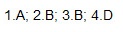
问题1要求选择一个最佳标题。文章主要讨论了智力和环境的关系,因此选项A最符合。
步骤 3:分析问题2
问题2要求根据文章内容判断平均智商。根据文章中Mark的智商为125,比平均值高25分,可以推断平均智商为100。
步骤 4:分析问题3
问题3要求根据双胞胎的案例得出结论。案例中Peter和Mark的智商差异主要由环境因素造成,因此选项B最符合。
步骤 5:分析问题4
问题4要求根据文章内容判断智商是否可以被教育提高。文章中提到环境对智力发展的重要性,因此选项D最符合。