题目
Without proper planning, tourism can cause problems. For example, too many tourists can crowd public places that are also enjoyed by the inhabitants of a country. If tourists create too much traffic, the inhabitants become annoyed and unhappy. They begin to dislike tourists and to treat them impolitely. They forget how much tourism can help the country’s economy. It is important to think about the people of a destination country and how tourism affects them. Tourism should help a country keep the customs and beauty that attract tourists. Tourism should also advance the well-being (health and happiness) of local inhabitants.Too much tourism can be a problem. If tourism grows too quickly people must leave other jobs to work in the tourism industry. This means that other parts of the country’s economy can suffer.On the other hand, if there is not enough tourism, people can lose jobs. Businesses can also lose money. It costs a great deal of money to build large hotels, airports, air terminals, first-class roads and other support facilities needed by tourist attractions. For example, a major international-class tourism hotel can cost as much as 50 thousand dollars per room to build. If this room is not used most of the time, the owners of the hotel will lose money.Building a hotel is just a beginning. There must be many support facilities as well, including roads to get to the hotel, electricity, sewers to handle waste, and water. All of these support facilities cost money. If they are not used because there are not enough tourists, jobs and money are lost.【小题1】Which of the following has most probably been discussed in the paragraph that goes before the passage?A.It is extremely important to develop tourism.B.Building roads and hotels is essential.C.Support facilities are highly necessary.D.Planning is of great importance to tourism.A.a bad impact on other industriesB.a change of tourists’ customsC.over crowded of places of interestD.pressure on trafficA.an increase of unemploymentB.a decrease in tourist attractionsC.the higher cost of support facilitiesD.a rise in price and a fall in payA.use up large amount of waterB.weaken their economyC.help establish their traditionsD.help improve their lifeA.carry awayB.pick upC.get inD.take down【小题2】Too much tourism can cause all these problems EXCEPT .A.a bad impact on other industriesB.a change of tourists’ customsC.over crowded of places of interestD.pressure on traffic【小题3】Not enough tourism can lead to .A.an increase of unemploymentB.a decrease in tourist attractionsC.the higher cost of support facilitiesD.a rise in price and a fall in pay【小题4】It is good for local people to be well aware that tourism will .A.use up large amount of waterB.weaken their economyC.help establish their traditionsD.help improve their life【小题5】The word “handle” in the last paragraph most probably means .A.carry awayB.pick upC.get inD.take down
Without proper planning, tourism can cause problems. For example, too many tourists can crowd public places that are also enjoyed by the inhabitants of a country. If tourists create too much traffic, the inhabitants become annoyed and unhappy. They begin to dislike tourists and to treat them impolitely. They forget how much tourism can help the country’s economy. It is important to think about the people of a destination country and how tourism affects them. Tourism should help a country keep the customs and beauty that attract tourists. Tourism should also advance the well-being (health and happiness) of local inhabitants.
Too much tourism can be a problem. If tourism grows too quickly people must leave other jobs to work in the tourism industry. This means that other parts of the country’s economy can suffer.
On the other hand, if there is not enough tourism, people can lose jobs. Businesses can also lose money. It costs a great deal of money to build large hotels, airports, air terminals, first-class roads and other support facilities needed by tourist attractions. For example, a major international-class tourism hotel can cost as much as 50 thousand dollars per room to build. If this room is not used most of the time, the owners of the hotel will lose money.
Building a hotel is just a beginning. There must be many support facilities as well, including roads to get to the hotel, electricity, sewers to handle waste, and water. All of these support facilities cost money. If they are not used because there are not enough tourists, jobs and money are lost.
【小题1】Which of the following has most probably been discussed in the paragraph that goes before the passage?
【小题3】Not enough tourism can lead to .
【小题4】It is good for local people to be well aware that tourism will .
【小题5】The word “handle” in the last paragraph most probably means .
Too much tourism can be a problem. If tourism grows too quickly people must leave other jobs to work in the tourism industry. This means that other parts of the country’s economy can suffer.
On the other hand, if there is not enough tourism, people can lose jobs. Businesses can also lose money. It costs a great deal of money to build large hotels, airports, air terminals, first-class roads and other support facilities needed by tourist attractions. For example, a major international-class tourism hotel can cost as much as 50 thousand dollars per room to build. If this room is not used most of the time, the owners of the hotel will lose money.
Building a hotel is just a beginning. There must be many support facilities as well, including roads to get to the hotel, electricity, sewers to handle waste, and water. All of these support facilities cost money. If they are not used because there are not enough tourists, jobs and money are lost.
【小题1】Which of the following has most probably been discussed in the paragraph that goes before the passage?
A.It is extremely important to develop tourism.
B.Building roads and hotels is essential.
C.Support facilities are highly necessary.
D.Planning is of great importance to tourism.
A.a bad impact on other industries
B.a change of tourists’ customs
C.over crowded of places of interest
D.pressure on traffic
A.an increase of unemployment
B.a decrease in tourist attractions
C.the higher cost of support facilities
D.a rise in price and a fall in pay
A.use up large amount of water
B.weaken their economy
C.help establish their traditions
D.help improve their life
A.carry away
B.pick up
C.get in
D.take down
【小题2】Too much tourism can cause all these problems EXCEPT .| A.a bad impact on other industries |
| B.a change of tourists’ customs |
| C.over crowded of places of interest |
| D.pressure on traffic |
| A.an increase of unemployment |
| B.a decrease in tourist attractions |
| C.the higher cost of support facilities |
| D.a rise in price and a fall in pay |
| A.use up large amount of water | B.weaken their economy |
| C.help establish their traditions | D.help improve their life |
| A.carry away | B.pick up |
| C.get in | D.take down |
题目解答
答案
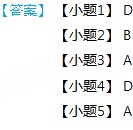
解析
考查要点:本题为英语阅读理解题,主要考查学生对文章主旨、细节理解、逻辑推理及词汇猜测的能力。
解题核心:
- 上下文推断(小题1):需根据段落首句推断前文内容,抓住文章核心主题“旅游规划的重要性”。
- 细节判断(小题2-4):需结合文章具体段落,排除干扰项,锁定关键信息。
- 词汇理解(小题5):通过语境分析“handle”的具体含义。
破题关键:明确文章结构(总分总),抓住每段核心观点(如“过度旅游的负面影响”“旅游不足的后果”),并注意逻辑关联词(如“on the other hand”)。
小题1
关键思路:文章首句“Without proper planning, tourism can cause problems”直接点明主题,前文应讨论与“规划”相关的内容。
选项分析:
- D(规划对旅游重要):首句强调“无规划会导致问题”,说明前文可能已说明“规划的重要性”。
- 其余选项(如A、C)仅涉及旅游某一方面,未直接关联首句逻辑。
小题2
关键思路:定位第二段“Too much tourism can be a problem”后内容,排除未提及的选项。
选项分析:
- B(改变游客习俗):文章未提及游客自身习俗的变化,属于无关项。
- 其余选项(A、C、D)均对应文中“影响经济其他行业”“拥挤”“交通压力”等内容。
小题3
关键思路:第三段“Not enough tourism”段落明确说明后果。
选项分析:
- A(失业增加):文中直接提到“people can lose jobs”“Businesses can also lose money”。
- 其余选项(B、C、D)与文意不符(如“设施成本高”是旅游不足导致的间接结果,非直接影响)。
小题4
关键思路:最后一段“Tourism should help...well-being”强调旅游对居民生活的积极影响。
选项分析:
- D(改善生活):对应“advance the well-being(健康与幸福)”的表述。
- 其余选项(A、B、C)未被文章支持(如“消耗水资源”是设施建设的客观需求,非直接影响)。
小题5
关键思路:结合上下文“sewers to handle waste”推断“handle”的含义。
选项分析:
- A(处理、带走):下水道的主要功能是“输送/处理废水”,与“handle”语境一致。
- 其余选项(如B“捡起”)与语境不符。