If you were like most children, you probably got upset when your mother called you by a sibling’s (兄弟姐妹的) name. How could she not know you? Did it mean she loved you less?Probably not. According to the first research to tackle this topic head-on, misnaming the most familiar people in our life is a common cognitive (认知的) error that has to do with how our memories classify and store familiar names.The study, published online in April in the journal Memory and Cognition, found that the “wrong” name is not random but is always fished out from the same relationship pond: children, siblings, friends. The study did not examine the possibility of deep psychological significance to the mistake, says psychologist David Rubin, “but it does tell us who’s in and who’s out of the group”.The study also found that within that group, misnaming occurred where the names shared initial or internal sounds, like Jimmy and Joanie or John and Bob. Physical resemblance between people was not a factor. Nor was gender.The researchers conducted five separate surveys of more than 1,700 people. Some of the surveys included only college students, others were done with a mixed-age population. Some asked subjects about incidents where someone close to them—family or friend—had called them by another person’s name. The other surveys asked about times when subjects had themselves called someone close to them by the wrong name. All the surveys found that people mixed up names within relationship groups such as grandchildren, friends and siblings but hardly ever crossed these boundaries.In general, the study found that undergraduates were almost as likely as old people to make this mistake and men as likely as women. Older people and women made the mistake slightly more often, but that may be because grandparents have more grandchildren to mix up than parents have children. Also, mothers may call on their children more often than fathers, given traditional gender norms (常态). There was no evidence that errors occurred more when the misnamer was frustrated, tired or angry.【小题1】How might people often feel when they were misnamed?A.Unwanted.B.Unhappy.C.Confused.D.Indifferent.【小题2】What did David Rubin’s research find about misnaming?A.It is related to the way our memories work.B.It is a possible indicator of a faulty memory.C.It occurs mostly between kids and their friends.D.It often causes misunderstandings among people.【小题3】What is most likely the cause of misnaming?A.Similar personality traits (特点)B.Similar spellings of names.C.Similar physical appearance.D.Similar pronunciation of names.【小题4】What did the surveys of more than 1,700 subjects find about misnaming?A.It more often than not hurts relationships.B.It hardly occurs across gender boundaries.C.It is most frequently found in extended families.D.It most often occurs within a relationship group.【小题5】Why do mothers misname their children more often than fathers?A.They suffer more frustrations.B.They become worn out more often.C.They communicate more with their children.D.They generally take on more work at home.
If you were like most children, you probably got upset when your mother called you by a sibling’s (兄弟姐妹的) name. How could she not know you? Did it mean she loved you less?
Probably not. According to the first research to tackle this topic head-on, misnaming the most familiar people in our life is a common cognitive (认知的) error that has to do with how our memories classify and store familiar names.
The study, published online in April in the journal Memory and Cognition, found that the “wrong” name is not random but is always fished out from the same relationship pond: children, siblings, friends. The study did not examine the possibility of deep psychological significance to the mistake, says psychologist David Rubin, “but it does tell us who’s in and who’s out of the group”.
The study also found that within that group, misnaming occurred where the names shared initial or internal sounds, like Jimmy and Joanie or John and Bob. Physical resemblance between people was not a factor. Nor was gender.
The researchers conducted five separate surveys of more than 1,700 people. Some of the surveys included only college students, others were done with a mixed-age population. Some asked subjects about incidents where someone close to them—family or friend—had called them by another person’s name. The other surveys asked about times when subjects had themselves called someone close to them by the wrong name. All the surveys found that people mixed up names within relationship groups such as grandchildren, friends and siblings but hardly ever crossed these boundaries.
In general, the study found that undergraduates were almost as likely as old people to make this mistake and men as likely as women. Older people and women made the mistake slightly more often, but that may be because grandparents have more grandchildren to mix up than parents have children. Also, mothers may call on their children more often than fathers, given traditional gender norms (常态). There was no evidence that errors occurred more when the misnamer was frustrated, tired or angry.
【小题1】How might people often feel when they were misnamed?| A.Unwanted. | B.Unhappy. | C.Confused. | D.Indifferent. |
| A.It is related to the way our memories work. |
| B.It is a possible indicator of a faulty memory. |
| C.It occurs mostly between kids and their friends. |
| D.It often causes misunderstandings among people. |
| A.Similar personality traits (特点) | B.Similar spellings of names. |
| C.Similar physical appearance. | D.Similar pronunciation of names. |
| A.It more often than not hurts relationships. |
| B.It hardly occurs across gender boundaries. |
| C.It is most frequently found in extended families. |
| D.It most often occurs within a relationship group. |
| A.They suffer more frustrations. |
| B.They become worn out more often. |
| C.They communicate more with their children. |
| D.They generally take on more work at home. |
题目解答
答案
解析
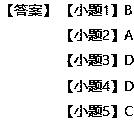
文章讨论了人们在日常生活中被叫错名字时的感受,以及心理学家David Rubin对这种现象的研究。研究发现,这种错误与记忆如何分类和存储熟悉的名字有关。
步骤 2:分析每个问题
问题1:当人们被叫错名字时,他们通常会有什么样的感受?
问题2:David Rubin的研究发现了关于叫错名字的什么?
问题3:叫错名字最可能的原因是什么?
问题4:对超过1,700名受试者进行的调查发现了关于叫错名字的什么?
问题5:为什么母亲比父亲更经常叫错孩子的名字?
步骤 3:根据文章内容回答问题
问题1:根据文章第一段,当孩子们被母亲叫错名字时,他们通常会感到不高兴。
问题2:根据文章第二段,David Rubin的研究发现叫错名字与记忆如何分类和存储熟悉的名字有关。
问题3:根据文章第三段,叫错名字最可能的原因是名字的发音相似。
问题4:根据文章第四段,对超过1,700名受试者进行的调查发现叫错名字通常发生在关系群体内。
问题5:根据文章最后一段,母亲比父亲更经常叫错孩子的名字是因为母亲与孩子交流更多。