Deep inside a mountain near Sweetwater in East Tennessee is a body of water known as the Lost Sea. It is listed by the Guinness Book of World Records as the world's largest underground lake. The Lost Sea is part of an extensive and historic cave system called Graihead Caverns. The Caverns have been known and used since the days of the Cherokee Indian nation. The Cave expands into a series of huge rooms from a small opening on the side of the mountain. One mile from the entrance, in a room called “The Council Room”, many Indian artistic facts have been found. For many years it had been considered that there was a large underground lake somewhere in a cave, but it was not discovered until 1905. In that year, a 13yearold boy named Ben Sands crawled into a small opening three hundred feet underground, and he found himself in a large cave half filled with water. Today tourists visit the Lost Sea and ride far out in glassbottomed boats. More than thirteen acres of water have been mapped out so far and still no end of the lake has been found. Even though teams of divers have tried to explore the Lost Sea, the full extent of it is still unknown. 25. Why is the Lost Sea completely different from any other one? A. Because it is part of a historic cave system. B. Because it is the largest underground lake in the world. C. Because it is listed in the Guinness Book of World Records. D. Because it is the largest body of water in Tennessee. 26.The Graihead Caverns have been known ________. A. throughout history B. since the year 1905 C. since the time of the Indian nation D. since divers explored them 27.What was found in “The Council Room”? A. A small natural opening. B. A large cave. C. Another series of rooms. D. Many things used by the Indians. 28.Which of the following is TRUE according to the passage? A. The Lost Sea came into being not long ago. B. The Lost Sea was believed to be somewhere long long ago. C. The cave which was found was full of water. D. The depth of the water has been found out now.
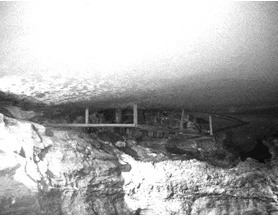
Deep inside a mountain near Sweetwater in East Tennessee is a body of water known as the Lost Sea. It is listed by the Guinness Book of World Records as the world's largest underground lake. The Lost Sea is part of an extensive and historic cave system called Graihead Caverns.
The Caverns have been known and used since the days of the Cherokee Indian nation. The Cave expands into a series of huge rooms from a small opening on the side of the mountain. One mile from the entrance, in a room called “The Council Room”, many Indian artistic facts have been found.
For many years it had been considered that there was a large underground lake somewhere in a cave, but it was not discovered until 1905. In that year, a 13yearold boy named Ben Sands crawled into a small opening three hundred feet underground, and he found himself in a large cave half filled with water.
Today tourists visit the Lost Sea and ride far out in glassbottomed boats. More than thirteen acres of water have been mapped out so far and still no end of the lake has been found. Even though teams of divers have tried to explore the Lost Sea, the full extent of it is still unknown.
25. Why is the Lost Sea completely different from any other one?
A. Because it is part of a historic cave system.
B. Because it is the largest underground lake in the world.
C. Because it is listed in the Guinness Book of World Records.
D. Because it is the largest body of water in Tennessee.
26.The Graihead Caverns have been known ________.
A. throughout history
B. since the year 1905
C. since the time of the Indian nation
D. since divers explored them
27.What was found in “The Council Room”?
A. A small natural opening.
B. A large cave.
C. Another series of rooms.
D. Many things used by the Indians.
28.Which of the following is TRUE according to the passage?
A. The Lost Sea came into being not long ago.
B. The Lost Sea was believed to be somewhere long long ago.
C. The cave which was found was full of water.
D. The depth of the water has been found out now.
题目解答
答案
25.B 由第一段第二句可知,作为世界上最大的地下湖被列入吉尼斯世界纪录。
26.C 由第二段第一句话可知。
27.D 由第二段最后一句话可知。
28.B 由第三段第一句“For many years it had been considered ...”可知,B项正确。
解析
考查要点:本题主要考查学生对文章细节的理解和信息匹配能力,需要根据原文中的具体描述,准确判断选项的正误。
解题思路:
- 定位关键句:每个问题均需回到原文对应段落,找到相关细节描述。
- 排除干扰项:注意选项中可能存在的绝对化表述(如“largest”“only”等)是否与原文一致。
- 时间逻辑判断:部分题目需结合时间线索(如“since...”“not discovered until...”)分析选项的合理性。
第25题
关键句:第一段第二句明确指出“Lost Sea被吉尼斯世界纪录列为世界最大的地下湖”。
干扰项排除:
- A选项仅描述其属于洞穴系统,未突出“最大”特性;
- C选项是结果而非原因;
- D选项范围限定在田纳西州,与世界纪录无关。
第26题
关键句:第二段首句“Graihead Caverns自切罗基人时代以来就为人所知”。
干扰项排除:
- B、D选项时间点(1905年、潜水员探索)是发现地下湖的时间,而非洞穴本身被发现的时间;
- A选项“贯穿历史”范围过大,原文限定为“印第安人时期”。
第27题
关键句:第二段最后一句“在‘The Council Room’发现了许多印度艺术事实(artistic facts)”。
干扰项排除:
- A、B、C选项描述的均为洞穴结构,而非具体内容;
- “artistic facts”指印第安人遗留的物品,对应D选项。
第28题
关键句:第三段首句“长期以来人们认为地下有大湖,但直到1905年才被发现”。
干扰项排除:
- A错误,因“Lost Sea”自古存在;
- C错误,因Ben Sands发现的洞穴“半满是水”而非“充满水”;
- D错误,因文章明确说明“湖的尽头仍未找到”。